



The Department of Biology at the University of South Alabama is a flagship department in the College of Arts and Sciences, with one of the highest student enrollments on campus. The department offers a Bachelor of Science in Biology, and undergraduates can pursue a concentration in Marine Biology or Environmental Sciences. Additionally, South offers a Master of Science in Biology and students can choose to be mentored by one of the department’s faculty members, which includes renowned experts in a range of biology-related disciplines.
Courses are taught primarily by full-time faculty, and students are provided with research opportunities each semester. Through mentorship, teaching and research, biology faculty foster an environment for active learning where students acquire knowledge in all areas of the field, including ecology, evolution, genetics, physiology, microbiology, conservation and global change. South strives for excellence and provides students with the analytical and technical skills necessary to work on microbes, marine mammals, and everything in between. Students from this program graduate as well-rounded alumni capable of pursuing professional, governmental and academic careers to tackle challenges facing our planet.
Role of Diversity, Equity, & Inclusion in Biology
The Department of Biology believes that diversity is crucial to our pursuit of academic
excellence and is deeply committed to creating a diverse and inclusive community.
A universal lesson in biology is that more diverse systems function better. The diverse
faces, experiences, and cultures each of us brings to the university and our department
improves the quality and creativity within our community. The Biology faculty will
continue to educate ourselves, to implement intentional, inclusive teaching practices,
and to foster a strong sense of belonging for ALL students in our program. ALL means
that no matter your race, gender expression and identity, who you love, background,
ability, beliefs, or country of origin, everyone is welcome in the Biology Department.

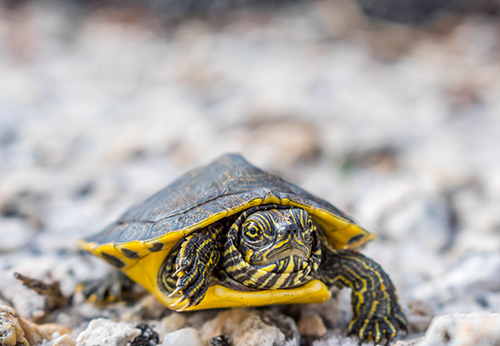
 Public Outreach on the Upper Tensaw River
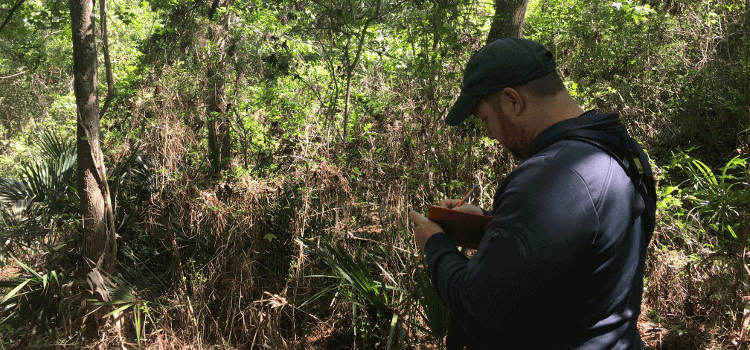 Upcoming bird outreach events featuring Joel Borden
 Skyler Magnus Kerr, Masters Student, Successfully Defends Thesis
Announcements
We are hiring a Department Chair
The Department of Biology at the University of South Alabama invites applications for the position of Department Chair at the rank of Professor. The starting date for this twelve-month, tenure track position is August 15, 2024.
Qualifications include 1) a Ph.D. in Biology or a closely related discipline, 2) a distinguished and active record of scholarly publications and excellence in research and teaching, 3) effective leadership and interpersonal skills, and 4) relevant administrative experience. The chair will also be expected to provide vision, creative leadership, and advance the department’s research and educational missions. Applicants must have at least one year in the respective rank at a comparable institution.
We are seeking candidates with a history of research productivity and evidence-based teaching, along with administrative skills and ability to lead a strongly cohesive department. Applicants must have a Ph.D. in Biology or a closely related discipline. For full consideration applications should be received by November 27, 2023.
Job application details are available at
http://www.southalabama.edu/departments/academicaffairs/facultyposition.html
Review of applications will begin on November 28, 2023, and continue until the position is filled.
The University of South Alabama is an EO/AA Employer – minorities/females/veterans/disabilities/sexual orientation/gender identity.
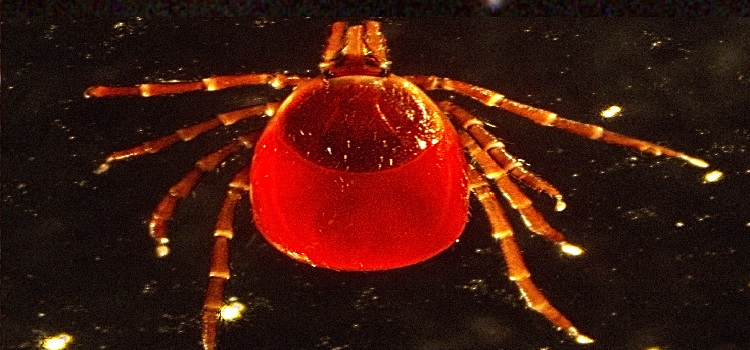
The Great Alabama Tick Survey
Alabama has experienced an increased incidence of tick-borne diseases affecting humans (ADPH 2017). Presently, the only state-wide tick surveillance program is based at the University of South Alabama. Given the size of Alabama, limited resources, and the potential importance of tick-borne diseases in the state, I am asking the public for help. All it takes is to send in any ticks found on a person (or pets) while outside. Sending is easy, just tape (Scotch tape is best) the tick(s) to a piece of paper, put it in a sealed envelope and send it to Dr. John McCreadie at the University of South Alabama (mailing address below). Submitted ticks will be identified to species and this information passed along to the person submitting the specimen. The only information needed about the tick is the location where the tick was found and date when the tick was found. Please also include an email address to receive the information about the identification of the species.
Thank you for your assistance!
Dr. John McCreadie, Entomologist
Department of Biology, 5871 USA Drive North
LSCB Room 124
University of South Alabama
Mobile AL 36688
(251) 460 6332