


“Heaven is under our feet as well as over our heads.”
- Henry David Thoreau, Walden
 Welcome to the University of South Alabama Earth Sciences web site. We are a dynamic
department consisting of 3 disciplines: Geography, Geology, and Meteorology. Our enthusiastic faculty enjoy working with students and are committed to making your education at South Alabama
a positive experience. We pride ourselves in being excellent teachers and talented
researchers with a strong track record of involving undergraduate students in research.
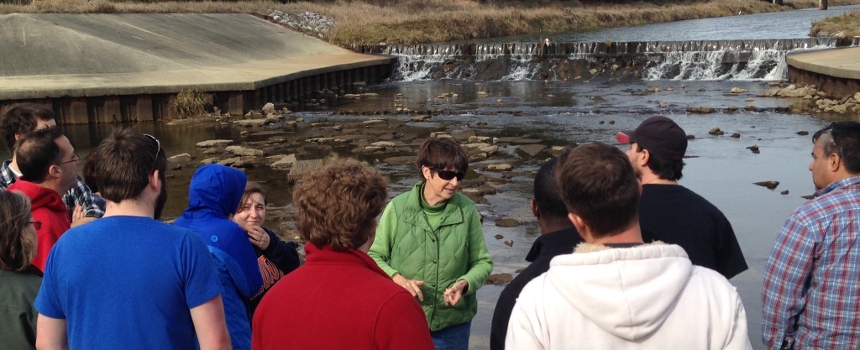
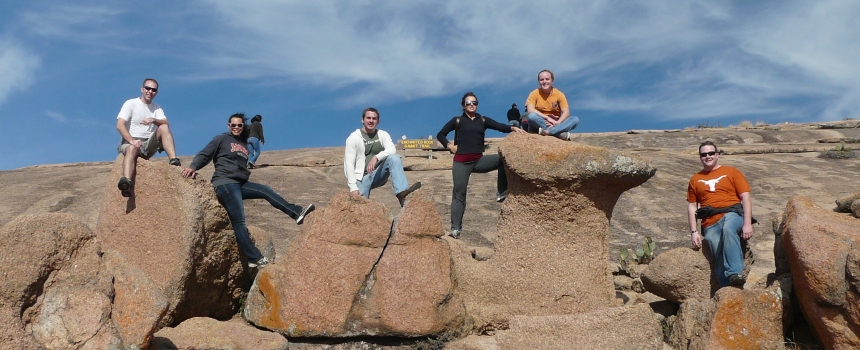
Most of our classes have a hands-on and field work component, but we also ensure you
have the theoretical knowledge necessary in your chosen profession. Besides majors
and minors in our 3 disciplines, we offer a GIS (Geographic Information Systems) certificate,
a GIT (Geographic Information Technology) minor, and a departmental honors program. Please visit our individual discipline webpages
for more information about each curriculum, the faculty, and career opportunities
after you graduate.
Welcome to the University of South Alabama Earth Sciences web site. We are a dynamic
department consisting of 3 disciplines: Geography, Geology, and Meteorology. Our enthusiastic faculty enjoy working with students and are committed to making your education at South Alabama
a positive experience. We pride ourselves in being excellent teachers and talented
researchers with a strong track record of involving undergraduate students in research.
Most of our classes have a hands-on and field work component, but we also ensure you
have the theoretical knowledge necessary in your chosen profession. Besides majors
and minors in our 3 disciplines, we offer a GIS (Geographic Information Systems) certificate,
a GIT (Geographic Information Technology) minor, and a departmental honors program. Please visit our individual discipline webpages
for more information about each curriculum, the faculty, and career opportunities
after you graduate.
While studying Geography, Geology, or Meteorology, our students have the opportunity to become involved in a multitude of departmental extra-curricular activities to hone their organizational and leadership skills. Some of these include becoming an officer in a student club or honors society, attending professional conferences, organizing a symposium, participating in undergraduate research, working as a teaching assistant or tutor, or learning how to maintain and operate technical equipment like weather stations or well-diggers.
If you are interested in any of our programs, please feel free to email me at skimball@southalabama.edu. If you would like to plan a visit, please let us know you are coming, so we can make sure someone from Geography, Geology, or Meteorology is available to give you a tour of the facilities and tell you more about the program.
Sincerely,
Dr. Sytske (Seets-kah) Kimball
Professor of Meteorology
Chair, Department of Earth Sciences